
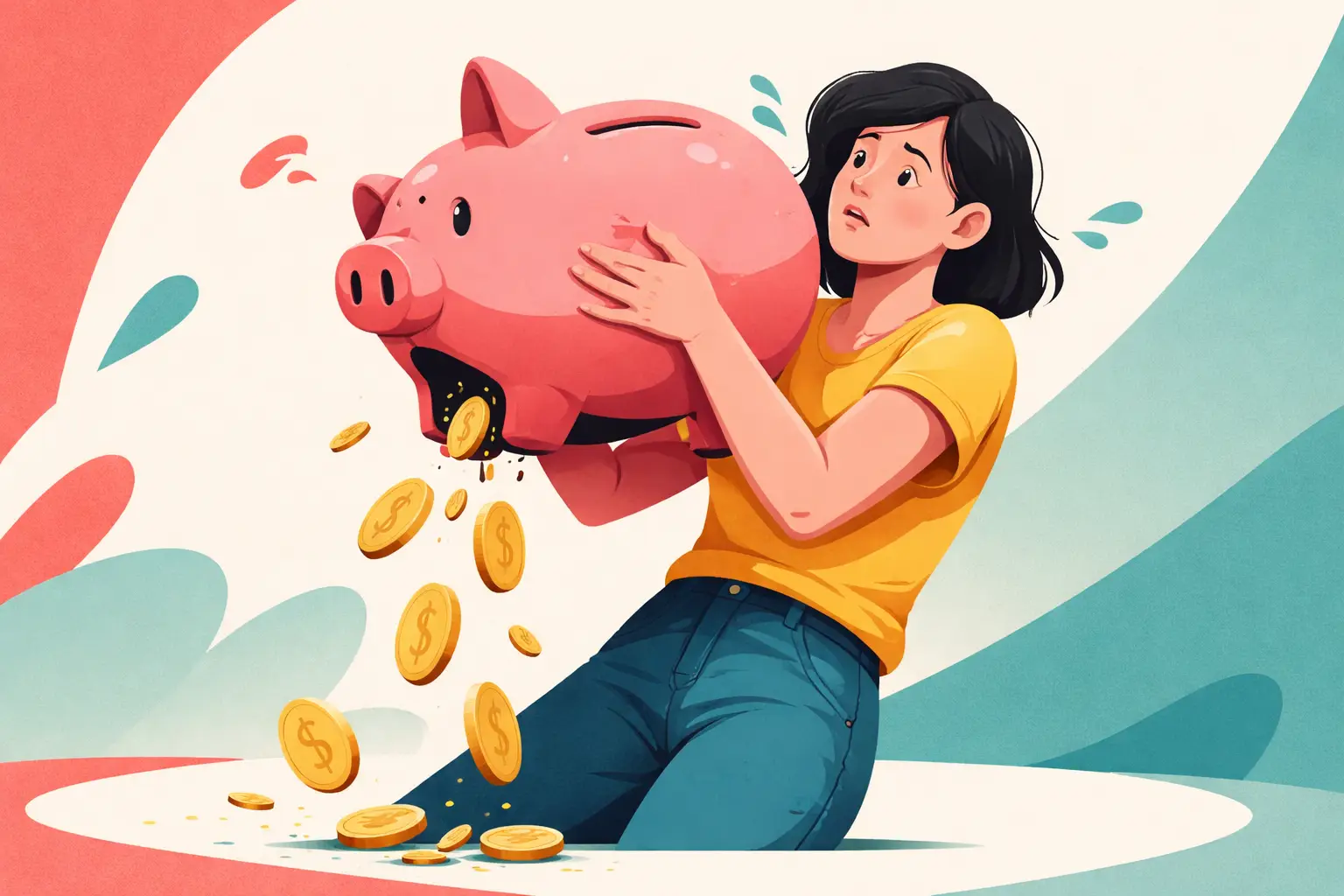

Saving money remains one of the most challenging financial behaviors for millions of people worldwide, despite universal acknowledgment of its importance. In an economy designed to encourage consumption at every turn, the simple act of setting aside funds for future needs battles against psychological tendencies, systemic pressures, and modern lifestyle expectations. Understanding why saving feels so difficult is the first step toward developing strategies that make consistent saving not just possible, but automatic and sustainable for long-term financial health.
- The Psychology Behind Spending: Why Our Brains Work Against Us
- The Rising Cost of Living Versus Stagnant Income Growth
- The Consumer Culture Trap: Marketing and Social Pressure
- Lack of Financial Education and Concrete Saving Goals
- Emergency Expenses and the Savings Cycle Disruption
- Overcoming Barriers: Practical Solutions That Actually Work
The Psychology Behind Spending: Why Our Brains Work Against Us
Human brains evolved to prioritize immediate rewards over distant future benefits, a trait that served survival in prehistoric times but sabotages modern financial planning. This present bias makes the pleasure of purchasing something today feel significantly more valuable than the abstract benefit of having money months or years from now. Dopamine releases triggered by shopping create genuine neurological rewards that saving simply cannot match in real-time.
Loss aversion further complicates saving behavior—psychologically, setting money aside feels like losing it, even though it remains yours. The pain of “losing” $100 to savings feels more intense than the pleasure of potentially gaining $100 in future security. Additionally, decision fatigue from countless daily choices depletes willpower, leaving little mental energy for the continuous self-control required to resist spending temptations and prioritize saving instead.

The Rising Cost of Living Versus Stagnant Income Growth
Economic realities create genuine obstacles to saving that go beyond personal discipline. Housing costs have dramatically outpaced wage growth in most developed economies, consuming larger portions of household budgets than previous generations experienced. Healthcare expenses, student loan debt, and childcare costs create fixed obligations that leave little discretionary income for many families trying to make ends meet.
The greatest challenge to saving isn’t lack of willpower—it’s a system where the cost of basic necessities rises faster than the ability to earn. Financial resilience requires addressing both personal habits and structural barriers.Elizabeth Warren, U.S. Senator and Economic Policy Expert
Inflation erodes purchasing power, meaning today’s dollars buy less than yesterday’s, creating a treadmill effect where income increases feel absorbed by rising prices. For those living paycheck to paycheck, saving isn’t a matter of discipline but mathematical impossibility—when expenses equal or exceed income, there’s simply nothing left to save. This structural reality affects a surprisingly large percentage of households, including many with seemingly comfortable middle-class incomes.
The Consumer Culture Trap: Marketing and Social Pressure
Modern consumer culture bombards individuals with sophisticated marketing designed specifically to override saving instincts. Targeted advertising uses personal data to present irresistible offers at moments of weakness. Limited-time promotions create artificial urgency, while “buy now, pay later” schemes disguise true costs and make spending feel painless in the moment, despite long-term financial consequences.
- Social media comparison culture fuels unnecessary spending to maintain appearances and keep up with curated lifestyles
- Subscription services create “death by a thousand cuts” with small recurring charges that accumulate significantly
- One-click purchasing removes friction from buying decisions, eliminating the pause that might prevent impulse spending
- Credit cards psychologically distance spending from actual money, making purchases feel less real than cash transactions
- Peer pressure and social expectations around experiences, gifts, and lifestyle choices override individual financial priorities
- Retailers deliberately design environments and websites to maximize impulse purchases and extended browsing time
Lack of Financial Education and Concrete Saving Goals
Most education systems provide minimal financial literacy training, leaving adults to navigate complex financial decisions without foundational knowledge. Without understanding compound interest, inflation, or basic budgeting principles, people lack the framework to appreciate why saving matters and how to implement effective strategies. This knowledge gap makes saving feel like deprivation rather than empowerment.
Equally problematic is saving without specific goals. Abstract intentions to “save more money” lack the motivational power of concrete objectives like “save $10,000 for a home down payment by December 2026” or “build a six-month emergency fund of $15,000.” Vague goals provide no measurement of progress, no timeline for achievement, and no emotional connection to sustain discipline through inevitable temptations. When saving lacks purpose beyond the general idea of being responsible, it becomes easy to justify “just this once” exceptions that become patterns.

Emergency Expenses and the Savings Cycle Disruption
The cruel irony of saving is that those who need emergency funds most are least able to accumulate them. Car repairs, medical bills, home maintenance, and unexpected job loss strike unpredictably, forcing people to drain whatever savings they’ve managed to accumulate. This creates a discouraging cycle: save diligently for months, lose it all to one emergency, start over from zero, repeat.
Each disruption not only depletes savings but damages motivation. The psychological toll of repeatedly failing to maintain savings—even when failure results from circumstances beyond individual control—creates learned helplessness. People begin to question whether saving is even possible for them, whether they’re simply “not good with money,” and whether trying is worth the emotional investment. Breaking this cycle requires both practical strategies to protect savings and mental frameworks that maintain motivation through setbacks.
Strategy to Overcome Saving Challenges
Implement the “reverse budget” method: instead of budgeting every expense category and hoping money remains for saving, determine your savings goal first and automatically transfer that amount to a separate account the day income arrives. Then budget your spending from what remains. This “pay yourself first” approach prioritizes saving before spending temptations arise. Start with just 1-2% of income if necessary—establishing the habit matters more than the initial amount, and you can gradually increase the percentage as the behavior becomes automatic.
Overcoming Barriers: Practical Solutions That Actually Work
Recognizing why saving is difficult enables targeted solutions rather than self-blame. Automation removes willpower from the equation—what transfers automatically requires no decision and creates no opportunity for temptation. Multiple savings accounts for different goals make progress visible and prevent “borrowing” from long-term objectives to fund short-term desires. Micro-saving apps that round up purchases or transfer small amounts create painless accumulation without noticeable lifestyle impact.
Addressing underlying issues proves equally important: negotiating bills to reduce fixed expenses, developing additional income streams to expand the gap between earnings and spending, building accountability partnerships with friends pursuing similar goals, and deliberately limiting exposure to spending triggers like marketing emails and social media shopping content. Rather than fighting human nature, effective saving strategies work with psychological tendencies while systematically removing obstacles.
Saving money is genuinely difficult—not because of personal failings, but because of psychological, economic, and cultural forces working against it. Acknowledging these challenges without surrendering to them allows for compassionate, strategic responses. Progress may be slower than desired and setbacks will occur, but each dollar saved represents a victory against powerful opposing forces. With understanding, systems, and persistence, the behavior that feels impossibly hard today can become the automatic habit that secures your financial future tomorrow.